ENTERPRISE 05. BLACK SOLDIER FLY
Nothing leaves this farm as waste.
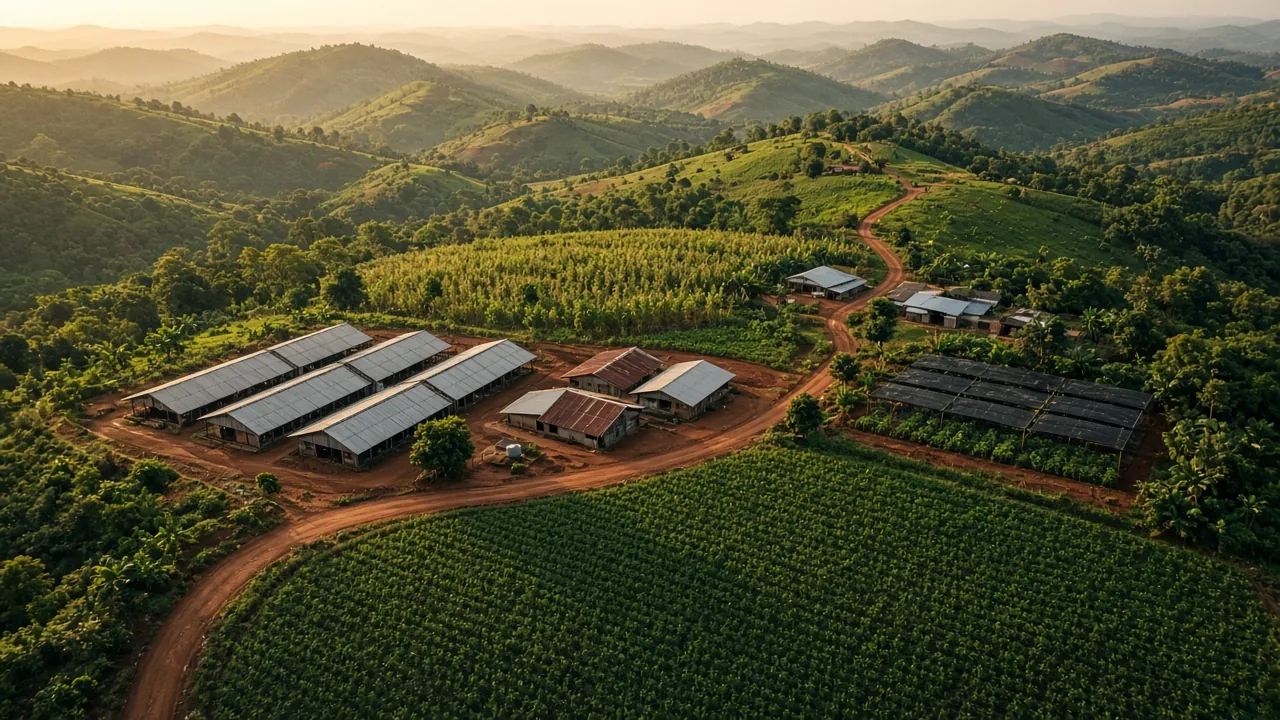
Organic material from the animal units, the mill and the kitchen is fed to Black Soldier Fly colonies. The larvae become feed protein. What the larvae leave behind is composted into fertiliser for the gardens and fields.
THE LOOP
Six stages, and then it starts again.
Select a stage to see what enters it, what leaves it, and which unit on the farm it belongs to.
Stage 01 · Whole farm
Organic material
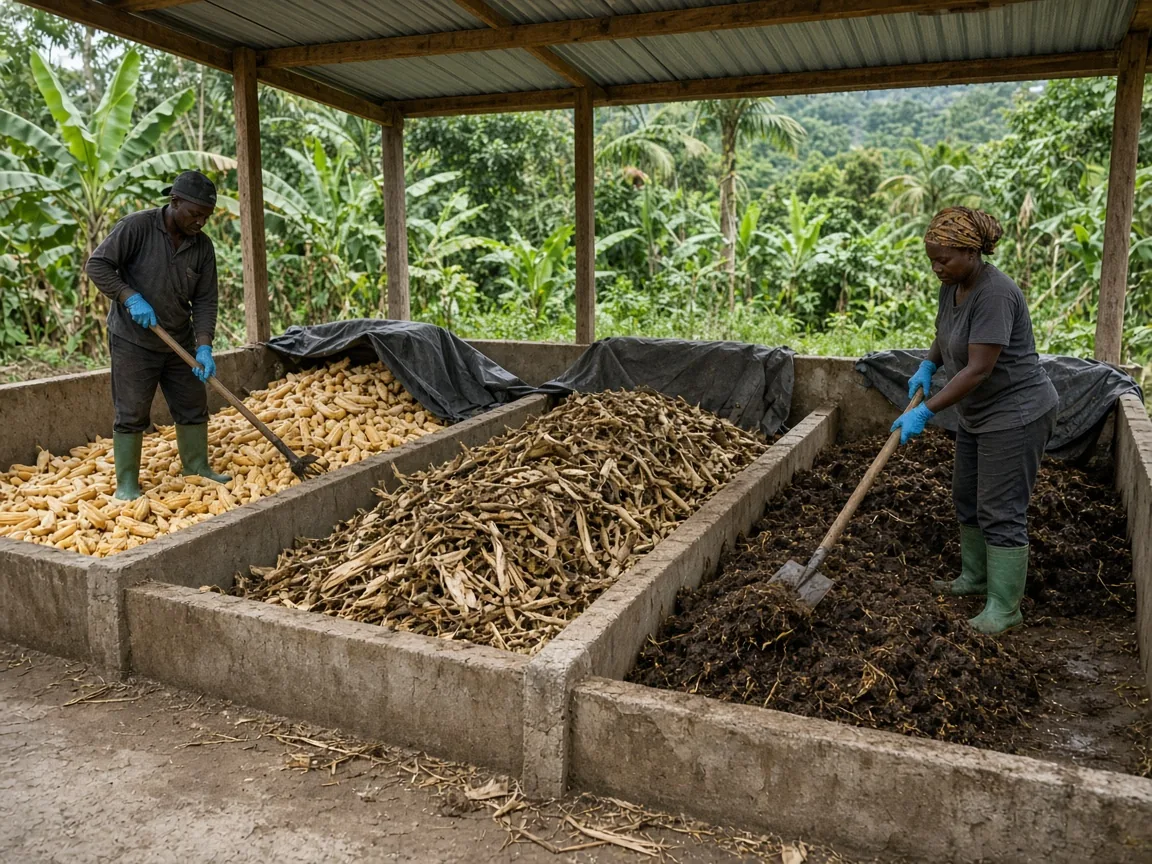
Manure from the poultry houses and pig pens, crop residue from the fields, dust and screenings from the mill, and kitchen waste from the farm canteen are collected daily instead of dumped.
Stage 02 · Circular unit
Black Soldier Fly
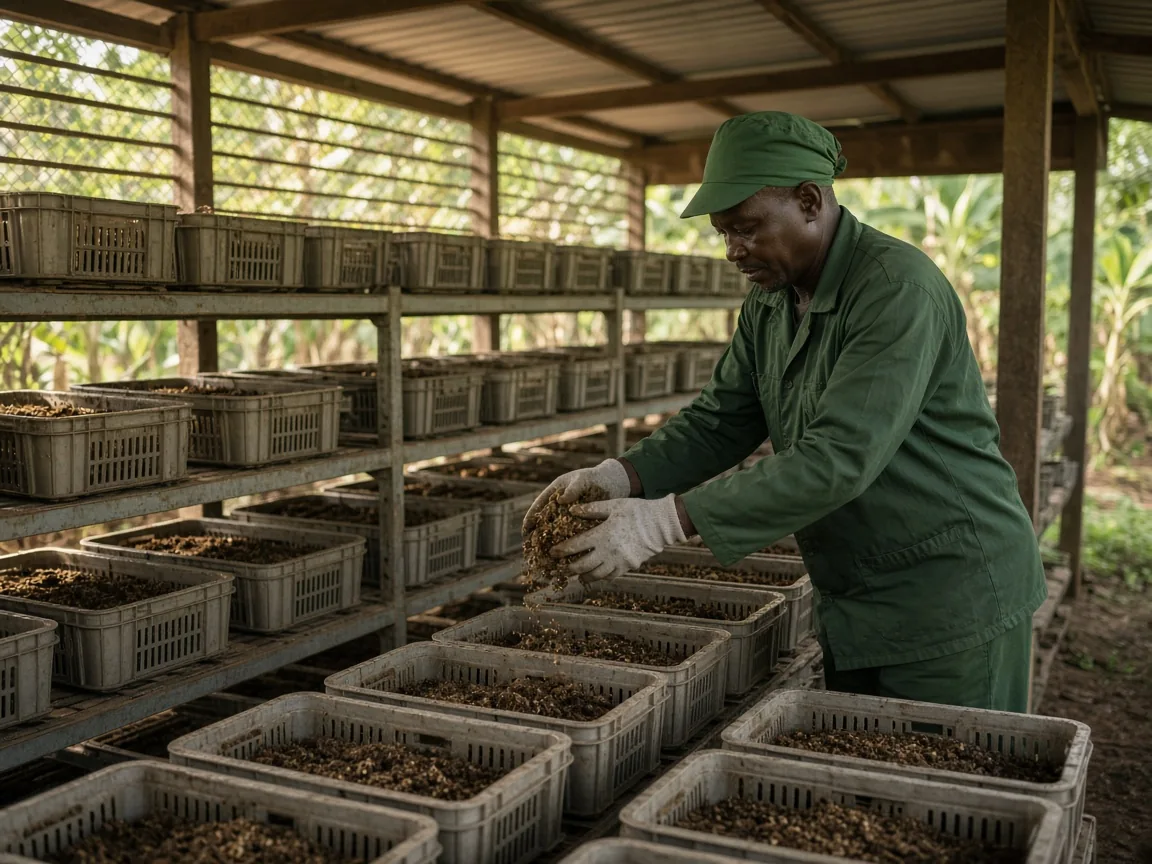
Colonies are kept in shaded crates with controlled moisture and loading. Eggs are collected onto substrate and the young larvae are moved into rearing crates on a rota.
Stage 03 · Circular unit
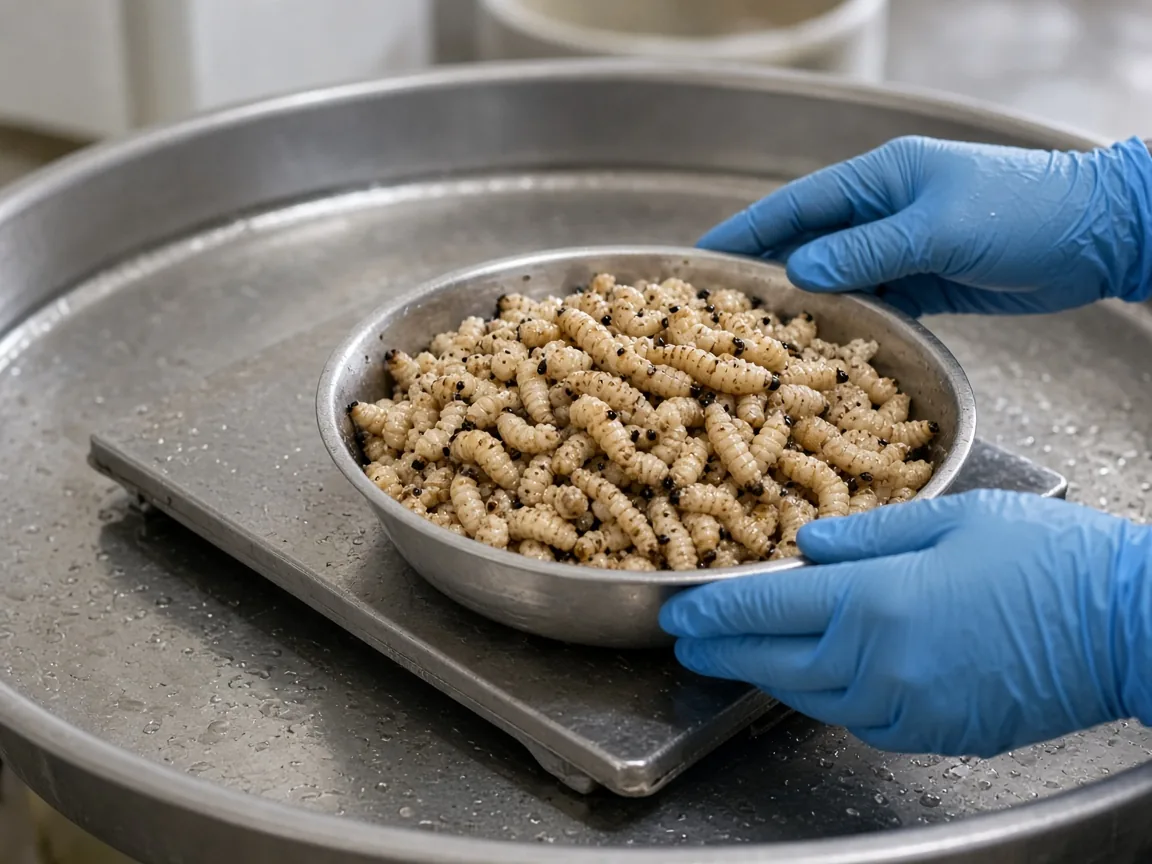
Larvae
Larvae are harvested at the right stage, cleaned and dried so they can be stored and mixed into rations rather than fed live and unmeasured.
Stage 04 · Feed unit
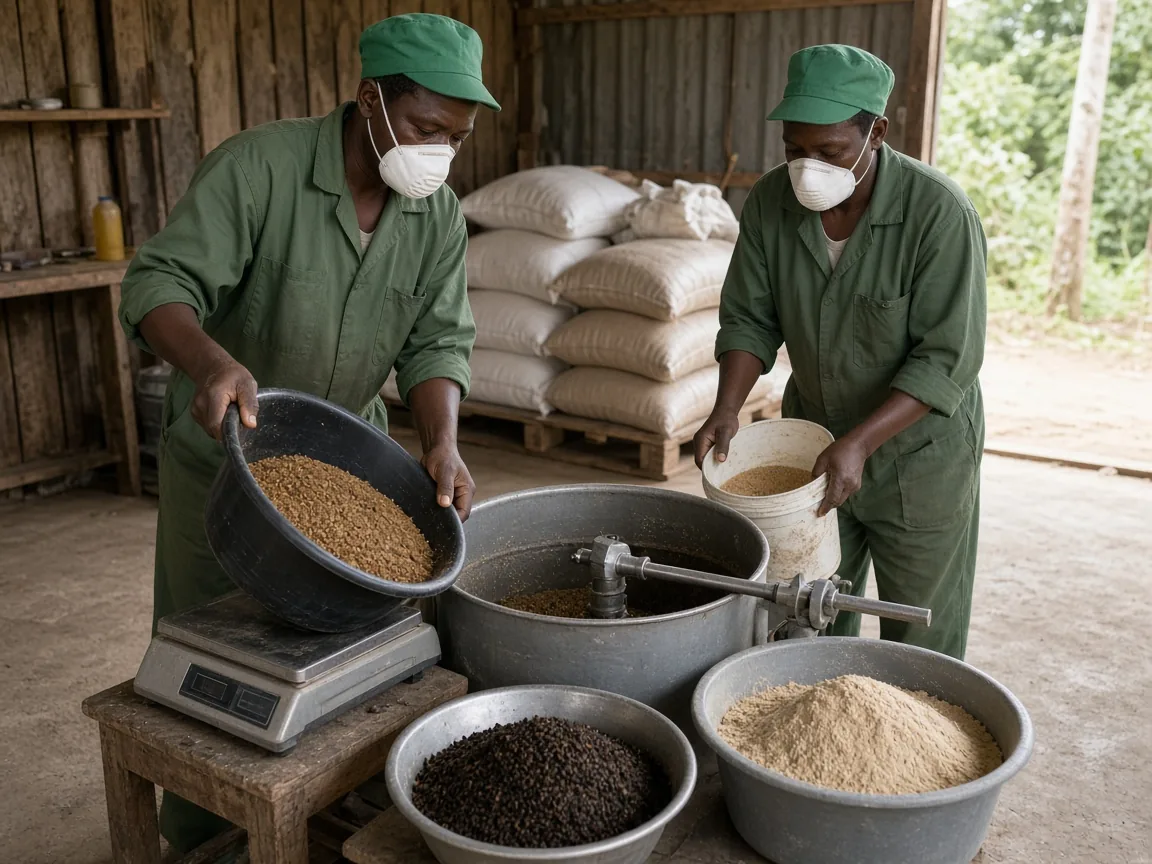
Feed protein
Dried larvae go into the feed mix alongside maize bran and bought-in concentrates, replacing part of the protein the farm would otherwise buy.
Stage 05 · Circular unit
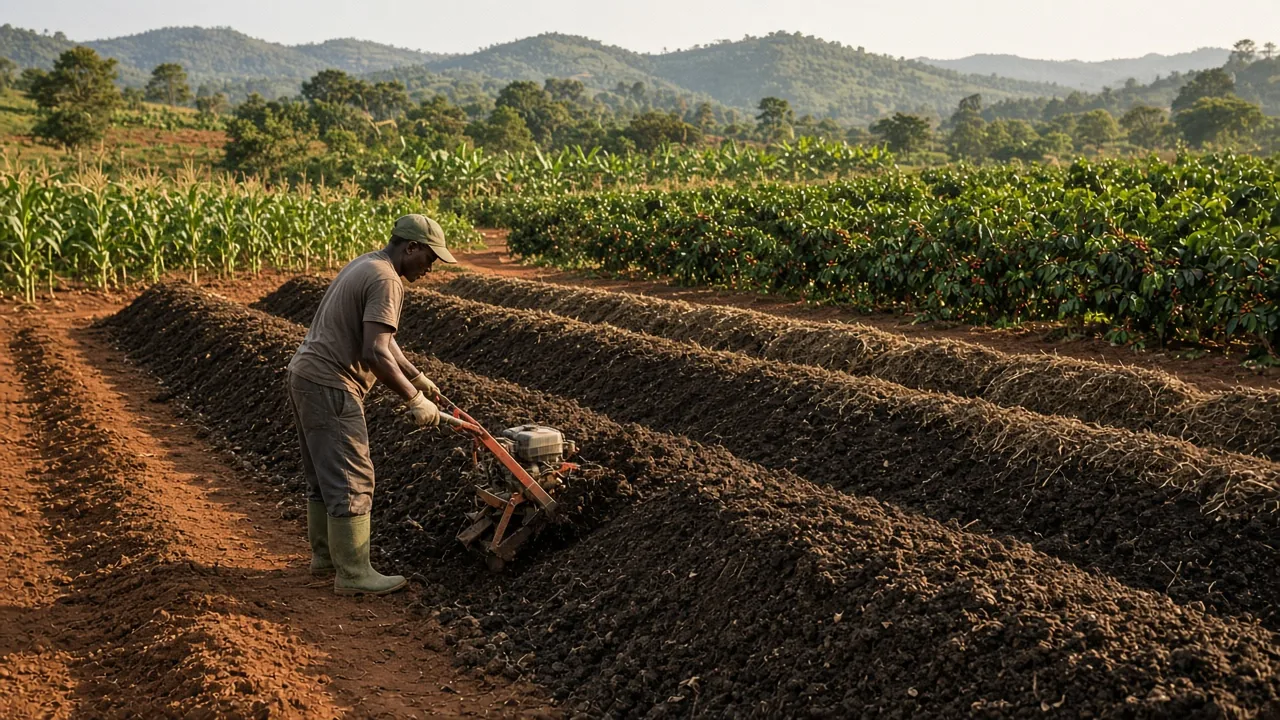
Residual material
What the larvae leave behind is windrowed and composted with other farm residues until it is stable enough to use or bag.
Stage 06 · Fields and gardens
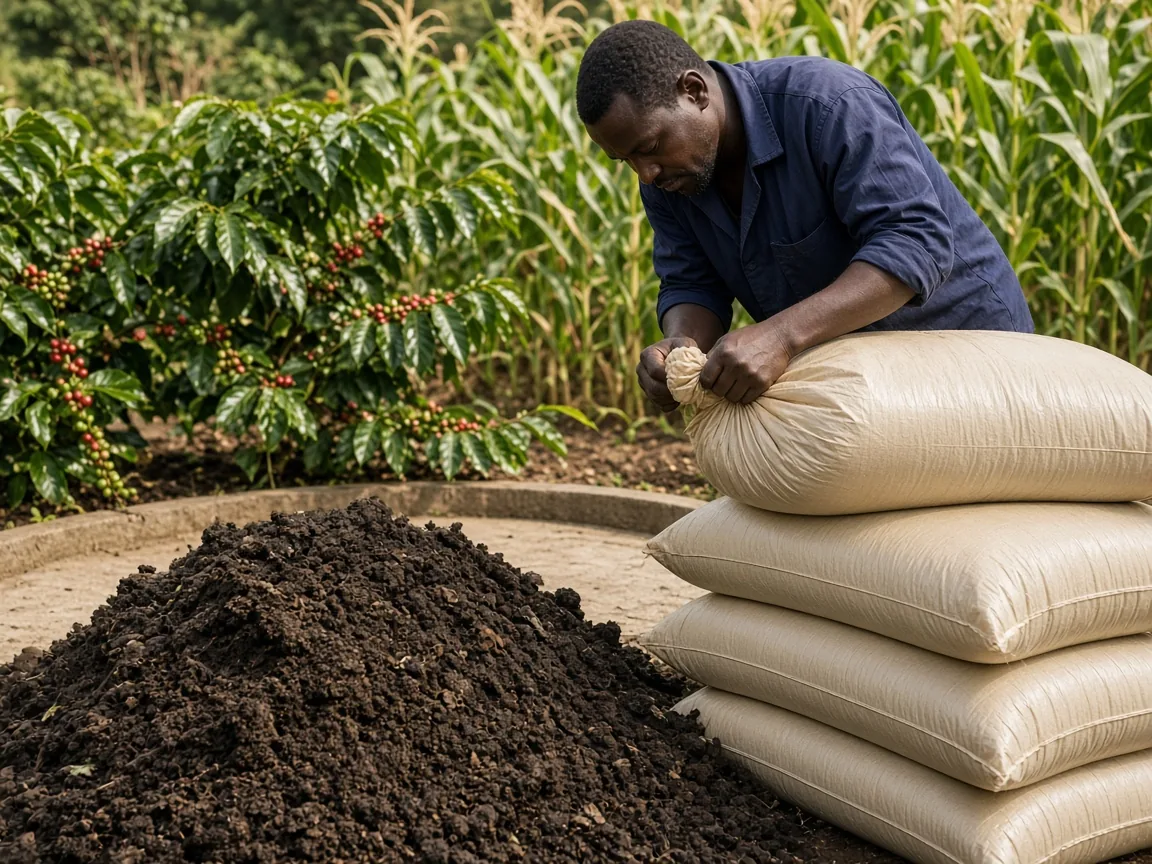
Organic fertiliser
Compost is applied to the coffee mother gardens, nursery medium and maize fields, and bagged for sale to nearby farmers when there is surplus.
WHY WE DO IT
Cost first, environment second, and we would rather say so.
Feed and fertiliser are the two biggest costs in this business. Producing part of both on site is a commercial decision that happens to reduce waste. That is the honest framing.
We make no certified environmental, carbon or organic claims on this page. Any figure describing waste diverted, fertiliser produced or feed substituted is farm-reported and clearly labelled as such.
OUTPUTS
What the unit produces.
COULD YOU DO THIS?
The loop works at more than one scale.
Pick the size of your operation and we will describe honestly what is worth doing, and what is not worth the labour yet. No conversion figures we cannot stand behind.
Worth doing
Not yet
Worth doing
Not yet
Worth doing
Not yet
Book the circular demo
A short walk through the crates and the compost line, pitched at household scale.
Half a day on crate management, moisture control and composting at small-farm scale.
A full session on unit layout, labour, harvest rota, drying and how we cost it.
Request received.
The circular unit will propose a date and send the biosecurity briefing.
FREQUENTLY ASKED
Questions about the circular unit.
The unit is kept separate from the animal houses with its own handling routine, and feedstock is sorted before it enters the crates. Biosecurity rules cover movement between the circular unit and the animal units.
No. It replaces part of the protein in the ration. The rest still comes from maize bran and bought-in concentrates, and the exact proportion is a formulation decision recorded in the feed unit.
Organic fertiliser is available bagged when there is surplus after farm use. Larvae are produced for our own rations first; enquire with the unit about availability.
Yes: the circular system is one of the most requested stops for farmer groups and student visits, and it can be booked as a demonstration on its own.
No, and we do not describe ourselves that way. We describe what we actually do: retain by-products, produce part of our own feed protein and compost our residues.